
 Silk
Silk
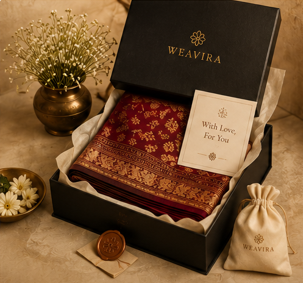
The Art of Bandha
Natural Dyes, Hand-Tied Resists, A Technique Unique to Odisha
Natural dyes, hand-tied resists, and a technique unique to the weavers of Odisha.
- "Bandha" means tie-dye in Odia.
- Threads are tied and resist-dyed before weaving.
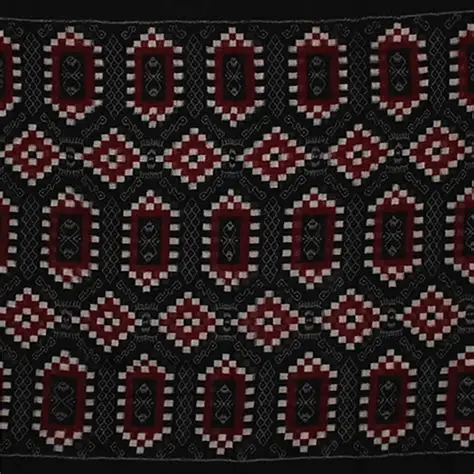
- Motifs are never printed – they emerge from the weave.
- A single colourway can take days of tying alone.
Colour that is tied in, not printed on
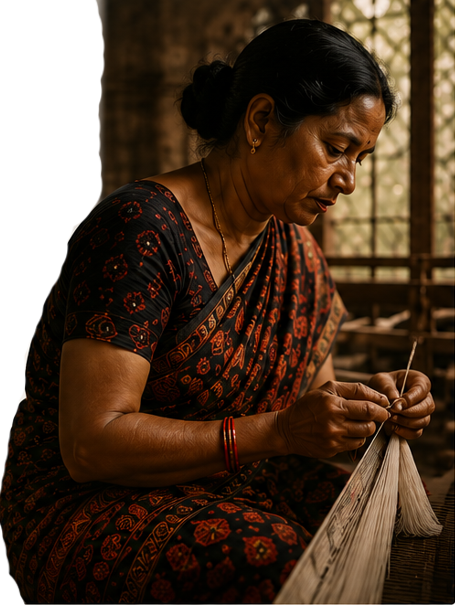
Bandha is the resist-dye technique at the heart of every Ikat saree. Before a single thread touches the loom, sections of yarn are bound tightly with thread to protect them from dye – a process repeated again and again to build up a pattern.
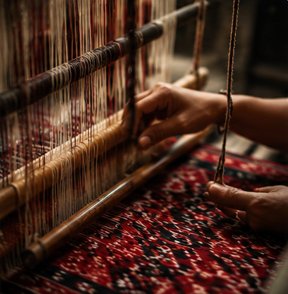
Unlike printing, where colour sits on top of the fabric, Bandha dye penetrates the yarn itself, which is why Sambalpuri motifs look identical on both sides of the cloth.
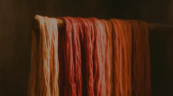
Each bundle of yarn is tied off by hand at the exact points where colour should not reach.
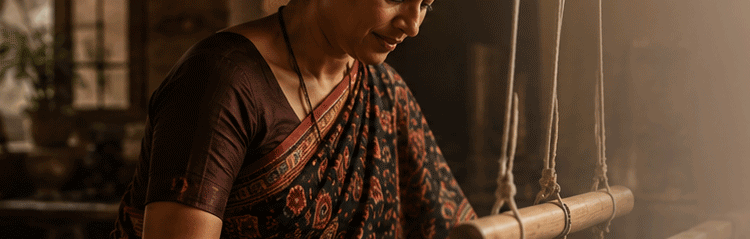
The yarn is then dipped, dried and re-tied – sometimes several times – before it is ready to weave.
You cannot rush the dye. Every knot has to sit exactly right, or the pattern breaks before it even reaches the loom.
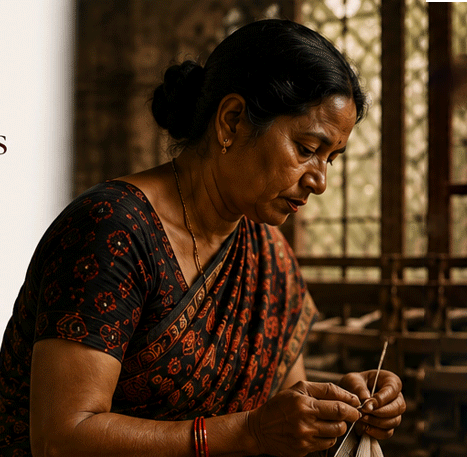
Sabitri Meher Master Dyer, BargarhBecause the dye soaks into the yarn itself rather than sitting on the surface, a genuine Bandha weave looks identical on the front and back of the fabric.
Frequently Asked Questions
Bandha is the Odia word for tie-dye – the technique of binding and resist-dyeing yarn before it is woven.
Bandha is the dyeing process; Ikat is the general term for the resulting woven fabric. Sambalpuri Ikat is created using the Bandha technique.
Traditional Bandha weaving uses plant-based, natural dyes, giving each saree its distinctive depth of colour.
References
- Odisha State Handloom Department
- The Art of Sambalpuri Weaves – Dr. H.K. Mahapatra
- Interviews with Local Dyers, Bargarh
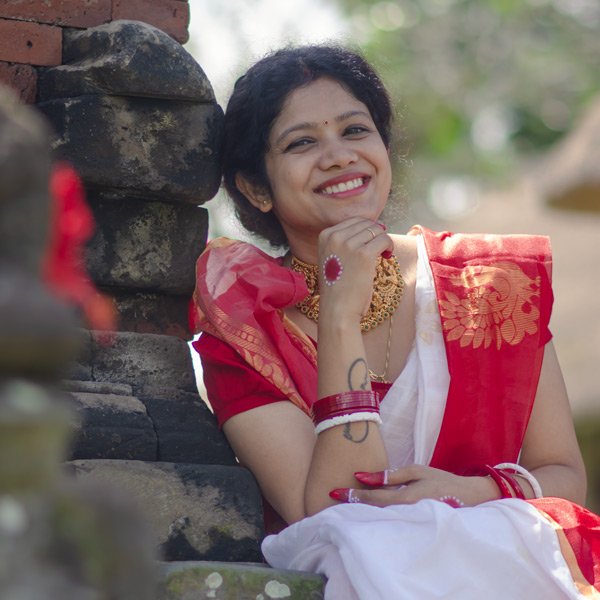
Bandha is slow, deliberate work – there is no machine that can replicate the judgement of a dyer deciding exactly where to tie a thread. It is this patience that gives every Sambalpuri saree its unmistakable, hand-made character.